How to Prevent Cross-Contamination: Raw Meat and Ready-to-Eat Food
Keep raw meat and ready-to-eat food safely separated in a busy kitchen, with practical preparation, cleaning and digital food safety record checks.
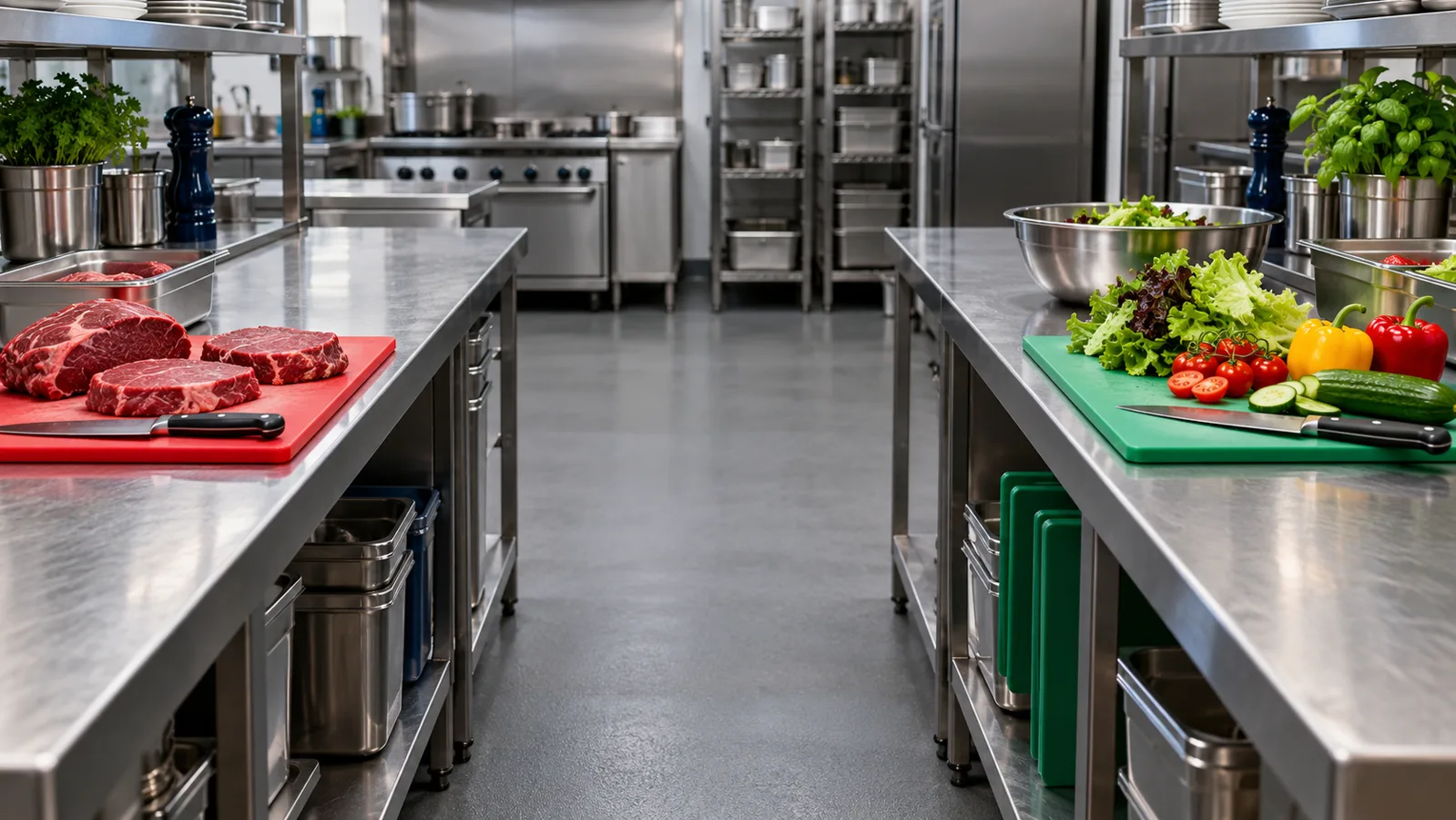
A small preparation area can create a serious risk
Imagine a takeaway during the evening rush. One person portions raw meat while another builds salads for customer orders. Both need the same bench. A board gets moved, someone reaches for the fridge handle, and a cloth passes between the two jobs.
That’s the situation this guide addresses: preventing cross-contamination when raw meat and ready-to-eat food share a kitchen. A food safety app can help organise checks, but the working routine has to be safe first.
What is cross-contamination?
- Cross-contamination
The transfer of harmful bacteria from one food, person, surface or piece of equipment to another.
Raw meat can contaminate salad directly, through contact or leaking juices. Transfer can also happen through a knife, hands or a fridge handle. Ready-to-eat food includes items such as washed salad, cheese and cooked foods served without further cooking. See the FSA’s explanation and prevention guidance.
Look beyond the chopping board
Use these examples to walk through your own service. They’re practical prompts for reviewing the workflow.
| Kitchen situation | What to review |
|---|---|
| Kebab shop assembling salad beside raw meat preparation | Location of the salad station and the route raw meat takes |
| Burger takeaway handling raw patties and finished buns | Separate utensils and handwashing between tasks |
| Café preparing chicken and sandwiches at different times | A clear handover before sandwich preparation begins |
| Catering trailer with one small worktop | Whether the menu and preparation schedule allow safe separation |
Can raw meat and ready-to-eat food use the same area?
Permanent separation is the stronger approach. Where that isn’t possible, the FSA allows controlled separation by time, with effective cleaning and disinfection between uses. It carries greater risk. Its E. coli guidance applies to England, Wales and Northern Ireland and links to separate Scottish guidance.
A different coloured board alone doesn’t establish a safe shared area. Ask who releases the bench for the next task and how another member of staff knows it’s ready.
A practical changeover routine
Finish and clear the raw task
Remove raw ingredients, packaging and used equipment. Keep ready-to-eat ingredients protected while the area is being reset.
Clean, then disinfect
Remove food debris and grease, then follow your documented disinfection method. Include affected handles and other touch points.
Reset staff and equipment
Wash hands, change contaminated protective clothing and bring out equipment reserved for ready-to-eat preparation.
Check before restarting
Have the responsible person confirm the changeover is complete. Record any failure and the action taken before releasing the area.
These steps are a planning aid. Your written method needs to suit the actual kitchen, products and equipment. If safe separation isn’t achievable, discuss the layout or workflow with your local food safety officer.
Cleaning needs a method, not just a tick
Cleaning removes food residues and dirt. Disinfection controls microorganisms on a properly cleaned surface. A visibly clean bench isn’t proof that disinfection has worked.
Follow the product instructions for dilution, contact time and any rinsing requirement. Choose a disinfectant suitable for the intended food-area use. Government cleaning guidance explains the relevant BS EN 1276 or BS EN 13697 standards and the need for cleaning schedules.
Write the method beside the task: what to clean, which product to use, how to use it, when it’s needed and who checks it. Include cleaning between incompatible jobs, rather than relying only on closing-time cleaning.
Hands and storage need the same attention
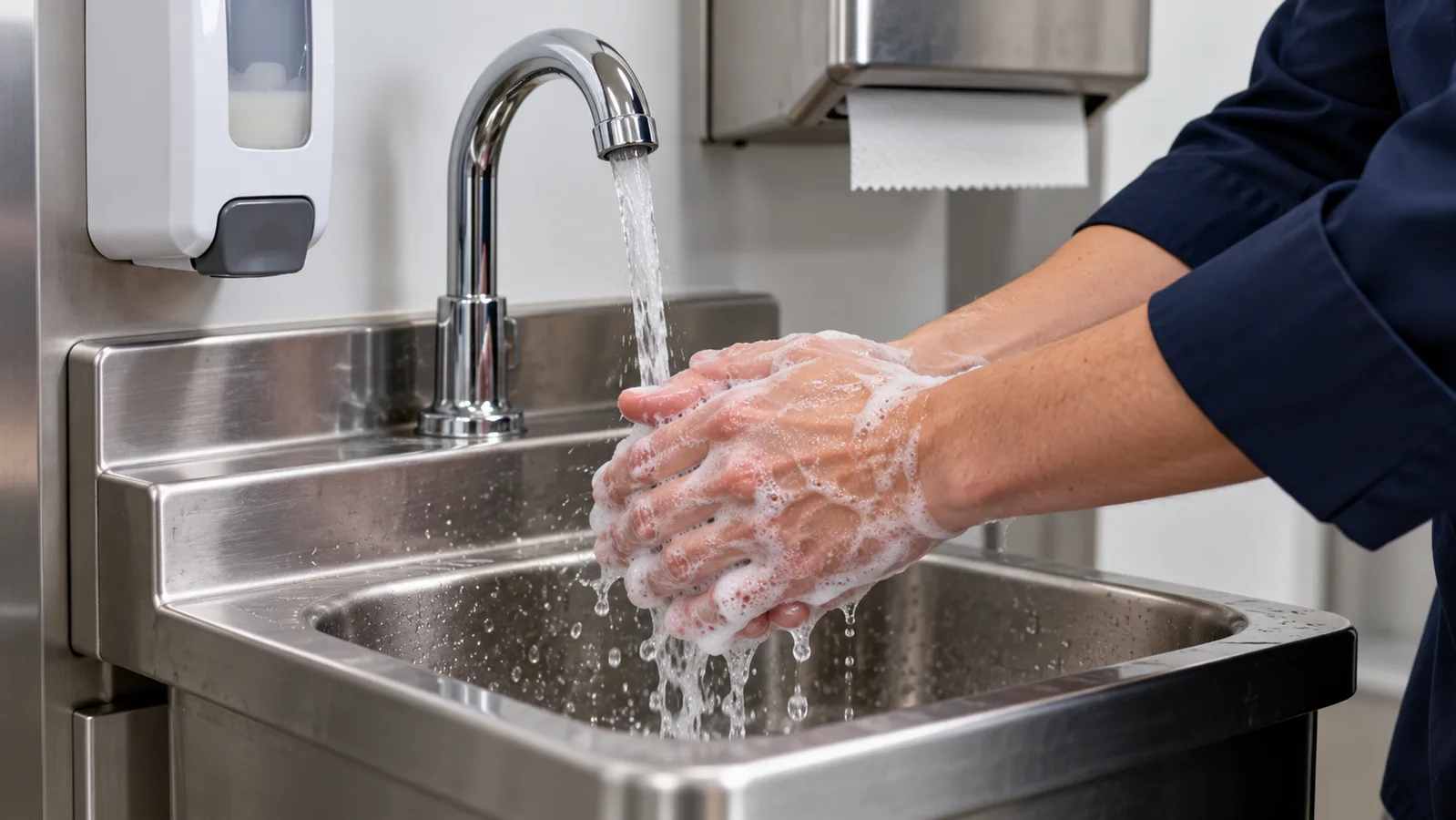
Handwashing matters when changing tasks. Gloves don’t replace it, and hand gel isn’t a substitute either. The FSA’s E. coli guidance also explains washing hands when changing or removing gloves.
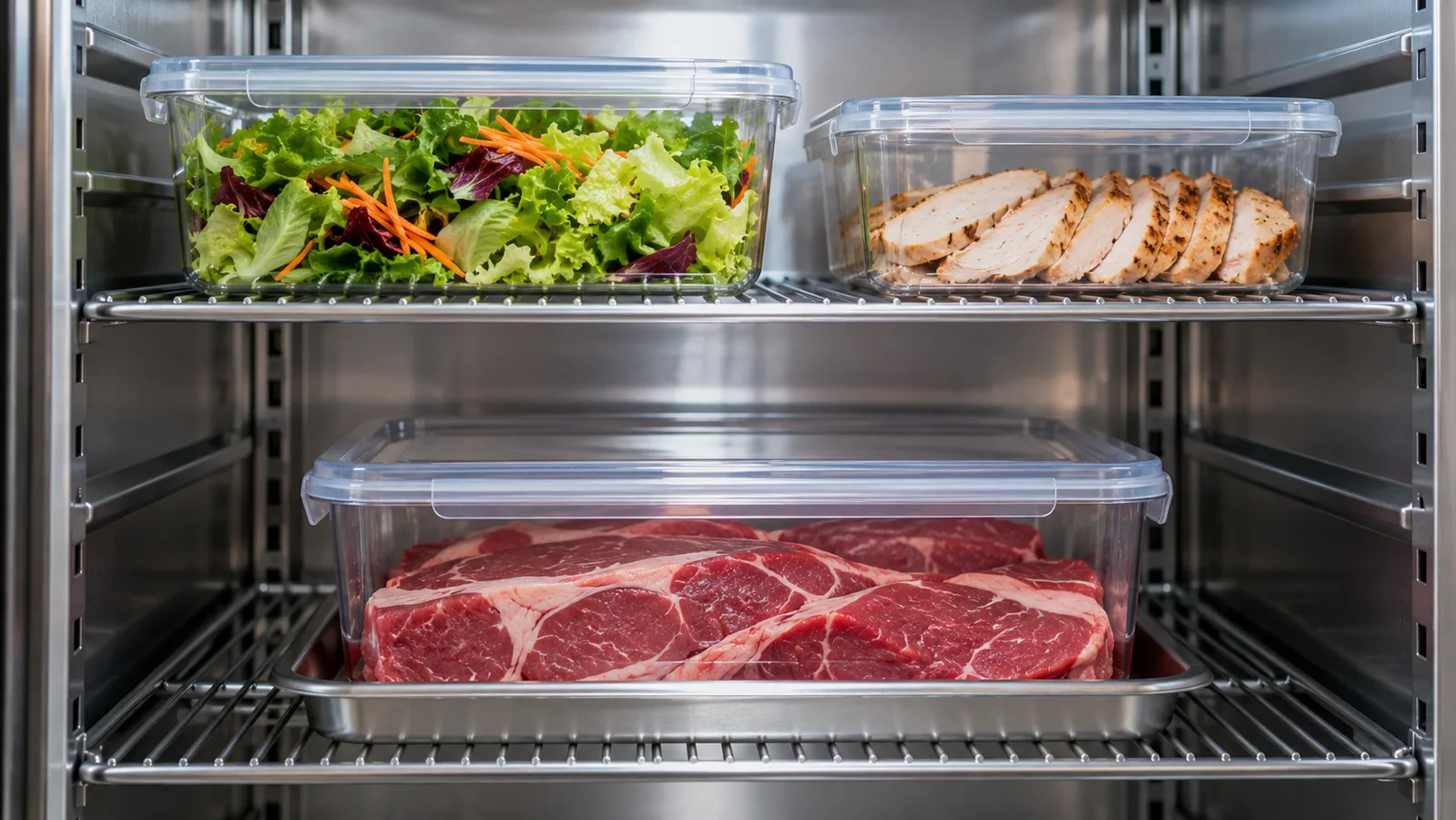
Keep raw food covered and below ready-to-eat food in shared refrigeration. Separate fridges are preferable where possible. Don’t wash raw meat or poultry: splashing can spread contamination. These controls are covered in the FSA prevention guidance.
What should you do if something goes wrong?
If raw meat juices reach a prepared salad, stop using it and discard it. Don’t try to make contaminated ready-to-eat salad safe by rinsing it.
As a practical response, isolate affected food, tell the supervisor and identify the surfaces and equipment involved. Clean and disinfect the affected area before restarting. If food may already have been served, get prompt advice from your local authority about the appropriate response.
Record what happened and change the routine that allowed it. For example, moving the salad station may address a repeated problem more effectively than reminding staff to be careful.
Use digital food safety records to support the routine
HACCP Records.app includes fully customisable opening and closing checks and cleaning tasks. Use these to reflect your own preparation areas. Corrective action and staff training records can help you document problems and follow-up work.
A HACCP app supports your food safety management system. It doesn’t replace supervision, effective cleaning or a suitable layout, and it can’t guarantee compliance.
Prompts for your next kitchen review
- Is the ready-to-eat preparation area clearly identified?
- Can staff explain the shared-area changeover method?
- Are cleaning products and instructions available?
- Does the busiest service follow the same safe routine?
- Are problems recorded and followed up?
Common questions
Is colour coding enough to prevent cross-contamination?
No. It helps staff identify equipment, but you still need separation, hand hygiene and an effective cleaning method.
Can a small catering trailer manage this safely?
Review the actual menu, available space and task sequence. If the workflow can’t protect ready-to-eat food, change the operation and seek local authority advice.
Should every cross-contamination control be a critical control point?
No. Many hygiene controls form the basic conditions supporting HACCP. Decide how controls fit your food safety management system through your own hazard analysis.
Sources and further reading
Guidance checked on 30 October 2026. The linked FSA publications cover England, Wales and Northern Ireland; check Food Standards Scotland guidance for Scottish operations.
- FSA: avoiding cross-contamination in your food business
- FSA: E. coli O157 cross-contamination guidance
- GOV.UK: cleaning in food businesses
Images are AI-generated illustrations of kitchen routines.